

Although the decisions of central banks may seem far removed from people’s lives, they have a direct impact on investors and the broader economy. Read on Understanding Treasury Bill Auctions: A Beginner’s Guide.
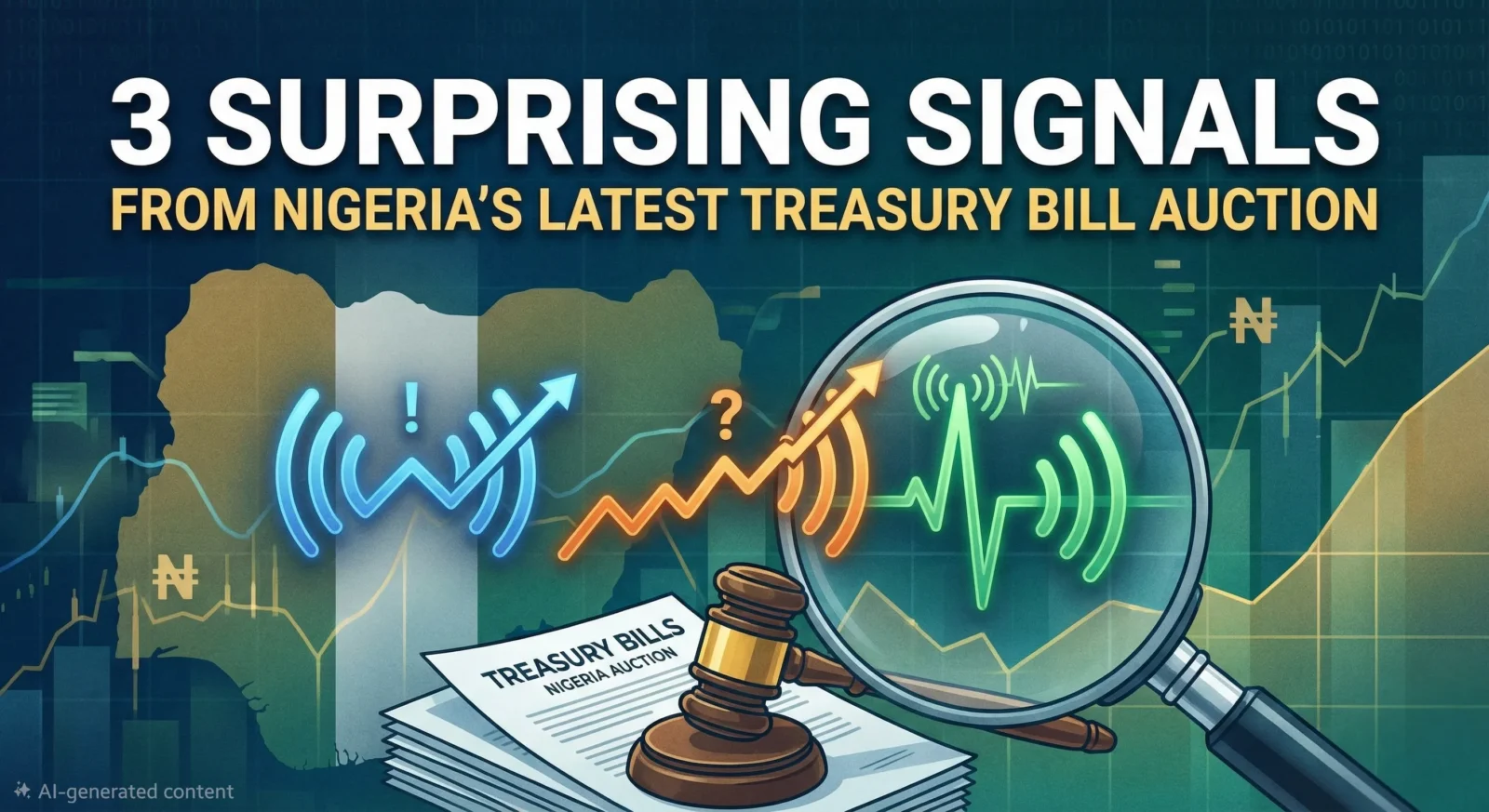
CBN’s first auction of 2026 Treasury bills was a blockbuster with bids of N1.543 trillion at N1.15 trillion of issues.
However, behind the surface success, the results revealed a profound market sentiment split that sent surprising signals which are deserving close scrutiny.
1. The Central Bank Is Aggressively Raising the Stakes
At its first auction this year, the CBN hiked interest rates (spot rates) on all of the standard Treasury bills, continuing the rapid tightening that began in the last quarter of 2025. The move demonstrates that the bank would like to attract money itself by making it more profitable for investors to lend to the government.
The specific rate increases were:
- 91-Day Bills: Increased to 15.80% (up from 15.30%).
- 182-Day Bills: Increased to 16.50% (up from 15.50%).
- 364-Day Bills: Increased to 18.47% (up from 17.95%).
But while the CBN’s intention was clear, the market’s response was sharply divided, revealing a deep split in investor strategy.
2. A Cold Shoulder for Short-Term Bills
Despite the CBN sweetening the deal with higher rates, investors flatly rejected the short-term offers—a move that speaks volumes about current market sentiment. Both the 91-day and 182-day bills were significantly undersubscribed, a stark anomaly in an auction that was otherwise oversubscribed in aggregate.
- 91-Day Bills: The CBN offered N150 billion but received only N112.263 billion in subscriptions. Of that, the bank ultimately sold N108.170 billion.
- 182-Day Bills: Demand was so weak that market watchers described it as a “practical boycott.” Against an offer of N200 billion, investors bid a mere N49.910 billion, with the CBN allotting just N48.230 billion.
This clear investor pivot away from short-term debt signals a profound belief that near-term volatility outweighs the appeal of slightly higher yields, pushing them to look for security elsewhere.
3. The One-Year Bill Was a Blockbuster Hit
In sharp contrast, demand for the 364-day bill was a blockbuster. Investors rushed to lock in the high long-term rate, indicating a strategic bet on the future direction of interest rates. The demand was so overwhelming that it more than compensated for the shortfalls in the other tenors.
The figures reveal the sheer scale of this capital flight to long-term security:
- Offer: The CBN put N800 billion on the table.
- Investor Bids: Investors staked a colossal N1.380 trillion—outstripping the offer by more than 70%.
- Final Sale: The CBN sold N987.784 billion, accepting nearly N188 billion more than its initial offer.
This massive oversubscription demonstrates that investors are eager to secure the 18.47% rate for a full year, a strategy that suggests they anticipate rates will not remain this high or are prioritizing guaranteed returns over liquidity in an uncertain market.
Conclusion: A Clear Message from the Market
The auction reflected a clear tug of war between what the central bank is trying to do with the policy and what markets are thinking. While the CBN raised rates all throughout to attract more investors, the market desired only a limited type of money. Investors are obviously telling you that in the today’s world, it’s long term security that matters most. Will this trend lead to a change in the way the central bank or short-term investors act?





Leave a comment