

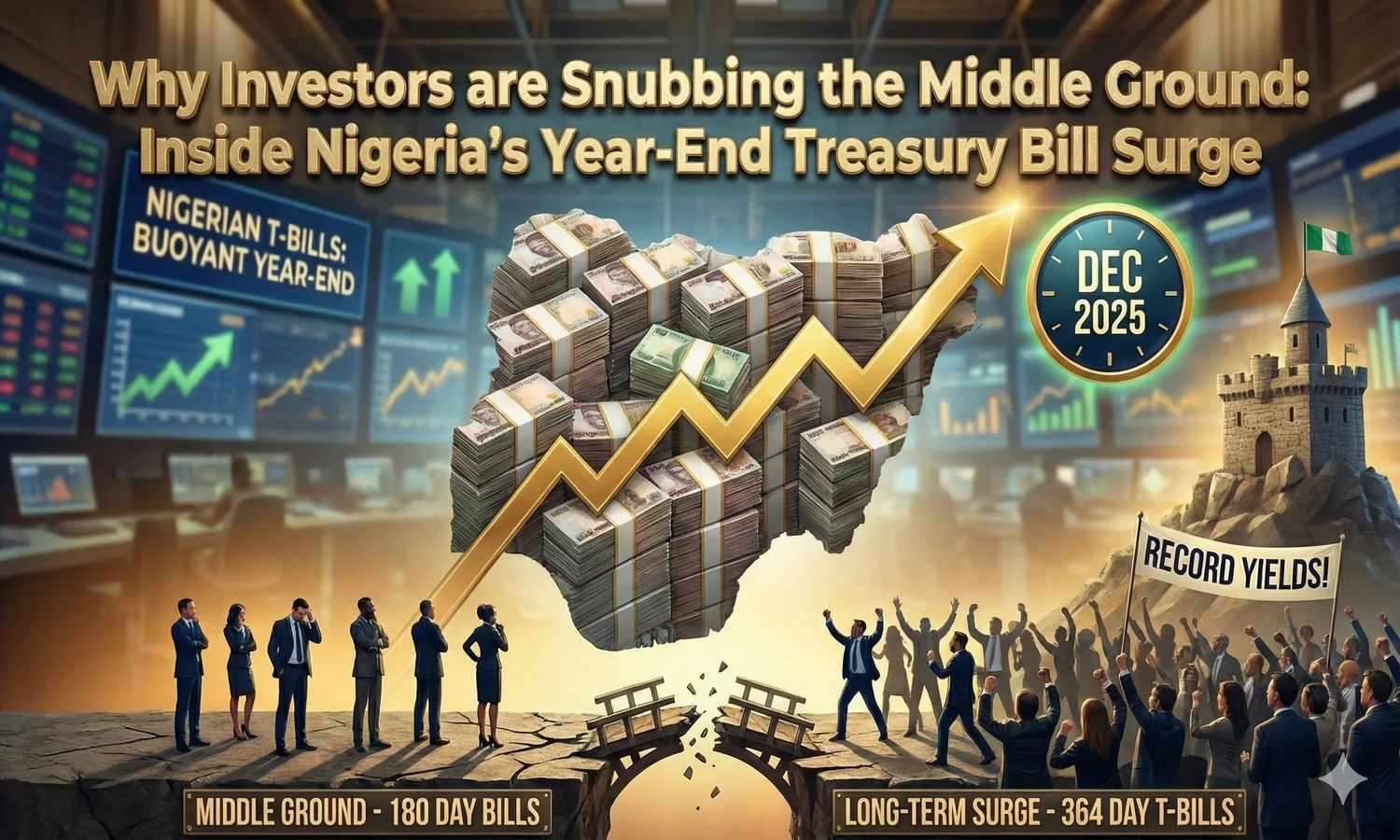
As December 2025 draws to a close, the Nigerian financial landscape is defined by a high-stakes environment of economic anxiety. With the Naira tumbling and chronic FX shortages stoking immense pressure on spot rates, investors are increasingly desperate for safe-haven assets that offer a semblance of protection against macroeconomic erosion.
Check Understanding Treasury Bill Auctions: A Beginner’s Guide.
Against this backdrop, the Central Bank of Nigeria (CBN) conducted its final primary market auction of the year on Wednesday, December 17, a “last dance” for institutional and private investors seeking to lock in guaranteed returns before the new fiscal year. While the CBN entered the market offering ₦700 billion in Nigerian Treasury bills, the response was a massive wall of capital: investors showed up with ₦1.509 trillion. However, a closer look at the data reveals a stinging rejection of the “middle ground,” exposing a profound divide in investor sentiment and a strategic exploitation of liquidity by the central bank.
The 364-Day Obsession: A Trillion-Naira Bet on Duration
The most striking takeaway from the auction was the staggering oversubscription of the one-year (364-day) bills. While the CBN offered ₦500 billion for this tenor, it was met with ₦1.385 trillion in subscriptions, representing a desperate “flight to quality” and a clear appetite for duration. In an economy facing persistent currency pressure, investors signaled that they would rather lock their capital away for a full year than navigate the treacherous waters of mid-term volatility.
The CBN, recognizing this desperation, moved to exploit the wall of liquidity. Despite only offering ₦500 billion, the authority opted for an over-allotment, accepting ₦581.99 billion. By taking an extra ₦81.99 billion beyond their target, the CBN effectively capitalized on the market’s urgency to lend.
“The amount bet on the one-year bills surpassed a total offer of N500 billion by more than 2 times.” — MarketForces Africa
The Mid-Tenor Ghost Town: A Stinging Rejection of Pricing
In sharp contrast to the one-year frenzy, the 182-day (six-month) bills faced a humiliating lack of interest, turning the mid-tenor into a “ghost town.” Despite a ₦100 billion target, the bills attracted a paltry demand of only ₦22.66 billion, with the CBN ultimately allotting just ₦22.07 billion.
This “failed repricing” occurred despite the CBN’s attempt to sweeten the deal with a 45-basis-point hike—the most aggressive increase of the auction. However, the resulting 15.95% rate remained insufficient to bridge the yield gap. Investors likely viewed the 15.95% return as inadequate compensation for the “dead zone” of a six-month lock-in when a significantly higher 17.51% yield was available just six months further out. The “middle ground” has officially become a no-man’s land; the market is currently favoring a “barbell” strategy—clinging to either immediate liquidity or long-term security.
The Rate Paradox: Exploiting the Long End
The auction results highlighted a divergent and highly tactical rate strategy from the CBN. While the bank was forced to be “generous” at the short end to attract enough liquidity to meet its targets, the overwhelming demand for the 364-day bill gave the regulator the leverage to actually trim the government’s cost of borrowing for the long term.
The specific rate movements and allotments reveal this paradox:
- 91-Day Bills: Rose 20 basis points to 15.50%. (Allotted ₦100.01bn on a ₦100.63bn subscription).
- 182-Day Bills: Rose 45 basis points to 15.95%. (Allotted ₦22.07bn on a ₦22.66bn subscription).
- 364-Day Bills: Reduced to 17.51% (from 17.95%). (Allotted ₦581.99bn on a ₦1.385tn subscription).
By raising rates on the 91-day tenor, the CBN successfully met its ₦100 billion target, but the failure to do so at the 182-day mark suggests the market’s yield curve is increasingly kinked. The bank’s ability to slash the 364-day rate by 44 basis points while still over-allotting by ₦81.99 billion is a masterclass in liquidity mop-up, yet it underscores how little leverage investors have when they are desperate for duration.
Conclusion: The Budgetary Shadow of 2026
The final auction of 2025 was a “mixed bag” that served as a raw barometer for market sentiment. While the CBN successfully mopped up excess liquidity, the stinging rejection of the mid-tenor bills signals potential interest-rate volatility ahead.
As we look toward 2026—a year defined by a massive ₦58.47 trillion budget proposal, the importance of these debt auctions cannot be overstated. The government’s ability to fund this ambitious budget depends on domestic borrowing. However, if investors continue to shun the middle of the yield curve, the government may be forced to pay a much higher premium than anticipated to secure the funds necessary for its 2026 obligations.
The year-end results leave us with a critical question: In an economy where the currency is under siege and the yield curve is shifting under our feet, is “locking in” for 364 days a brilliant hedge against further instability, or a risky gamble that ignores the looming threat of even higher rates in the new year?






Leave a comment