

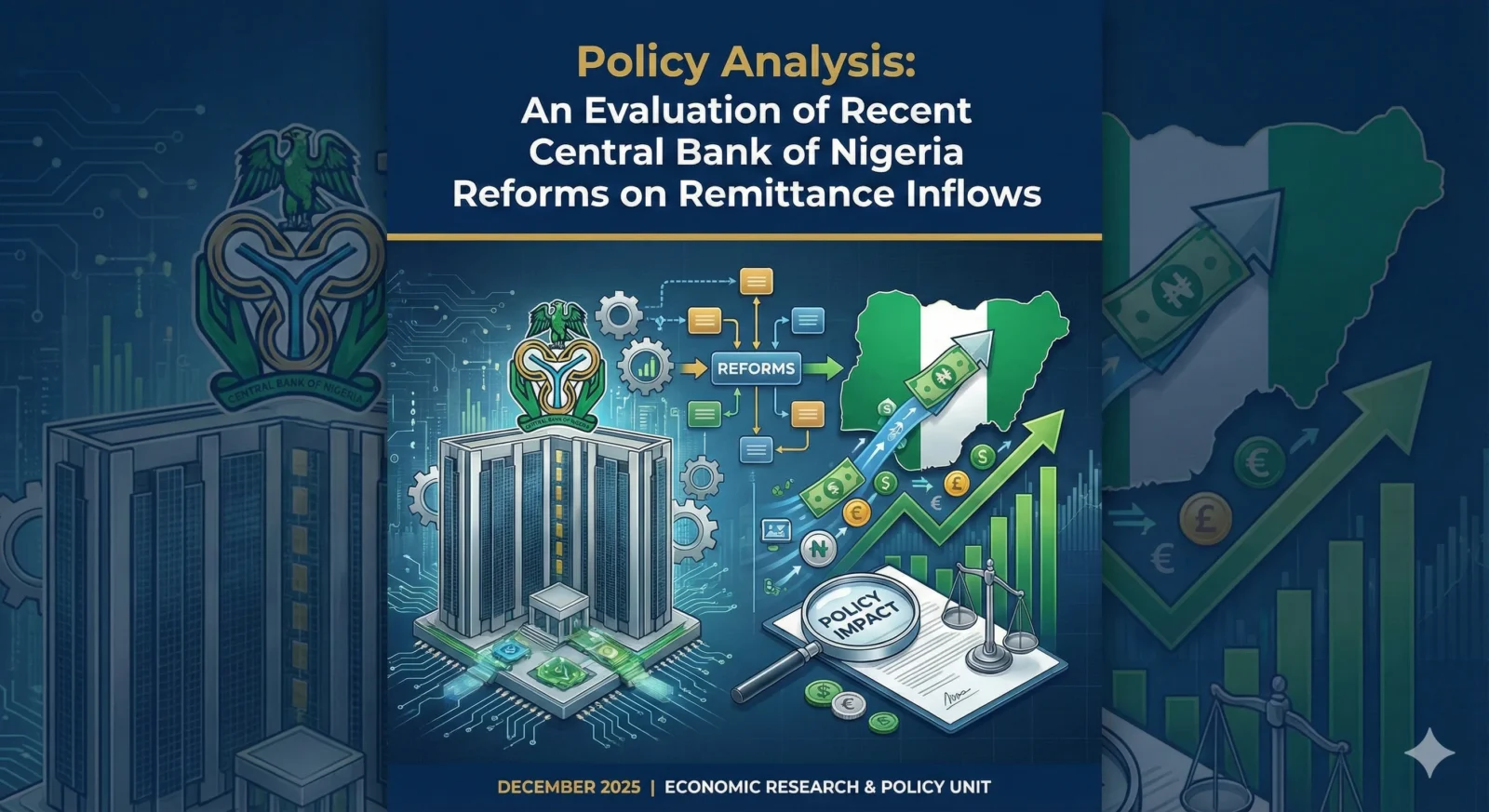
Diaspora remittances are a strategically vital component of Nigeria’s economy, serving as a critical source of foreign exchange, a support pillar for household consumption, and a key element in the national strategy to diversify away from volatile oil earnings. In an effort to stabilize the foreign exchange market and bolster these inflows, the Central Bank of Nigeria (CBN) has enacted a series of significant policy reforms. The core purpose of this analysis is to evaluate the effectiveness of these reforms in light of a notable 11.78 per cent decline in remittance inflows recorded during the first half of 2025. This report provides a data-driven overview of the current situation, details the specific policy measures implemented by the CBN, and offers a concluding assessment of their impact amidst prevailing economic conditions. Read on Nigeria’s Diaspora Lifeline Falters: Why Remittances Plunged $276M Despite Sweeping Reforms
1. The State of Remittance Inflows: A Half-Year Performance Review (H1 2025)
Tracking remittance data is a critical barometer for assessing the health of Nigeria’s non-oil foreign exchange earnings and the immediate impact of monetary policy. The performance in the first half of 2025 indicates significant pressure on this key economic lifeline, raising questions about the efficacy of recent interventions.
According to the latest figures from the CBN, total remittance inflows through International Money Transfer Operators (IMTOs) for the first half of 2025 stood at 2.07 billion**. This represents a marked decrease from the **2.34 billion recorded in the same period of 2024. The year-on-year decline amounts to $275.93 million, an 11.78 per cent contraction in a crucial source of foreign currency.
A detailed monthly breakdown reveals a persistent downward trend with one notable exception.
| Month | 2024 Inflow | 2025 Inflow | Year-on-Year % Change |
| January | $390.86m | $281.97m | -27.86% |
| February | $326.91m | $288.82m | -11.65% |
| March | $363.76m | $317.60m | -12.69% |
| April | $466.11m | $597.44m | +28.18% |
| May | $404.75m | $288.17m | -28.80% |
| June | $389.79m | $292.25m | -25.02% |
The anomalous 28.18% surge in April, while significant, was not structurally indicative of a market recovery. Its failure to reverse the negative trajectory across the other five months suggests it was likely driven by a transient event rather than a fundamental improvement in remittance drivers.
This performance is particularly concerning as it occurred despite a series of significant regulatory reforms by the CBN specifically designed to attract and formalize remittance inflows.
2. An Overview of the CBN’s Regulatory Reform Package
The CBN’s recent actions represent a deliberate, multi-faceted strategy aimed at stabilizing the foreign exchange market, rebuilding confidence, and increasing the formal inflow of diaspora remittances. The key measures enacted include:
- Market Liberalization Measures:
- The removal of the cap on exchange rates quoted by IMTOs in January 2024, which had previously restricted rates to a narrow band of ±2.5 per cent of the previous day’s closing rate.
- The lifting of the restriction that barred IMTOs from purchasing foreign exchange from the domestic market, allowing them to trade on the official market.
- Regulatory and Financial Requirements:
- A significant increase in the IMTO licence application fee from N500,000 to N10 million.
- The establishment of a new minimum operating capital requirement of $1 million for all IMTOs, both foreign and local.
- Institutional and Competitive Enhancements:
- The establishment of a Collaborative Task Force, reporting directly to the CBN Governor, with a mandate to double remittance inflows by increasing competition, engaging diaspora communities, and improving transparency.
- The recent granting of 14 new Approval-in-Principle licences to IMTOs to increase competition and streamline regulatory procedures.
These comprehensive reforms, which likely contributed to robust growth in 2024, form the critical backdrop for understanding the disappointing performance observed in H1 2025.
3. Analysis of Policy Impact and Market Response
The central analytical question is why remittance inflows have declined despite a reform package explicitly designed to increase them. This analysis posits that the CBN’s otherwise sound market liberalization reforms are being overwhelmed by a combination of macroeconomic headwinds and potentially counterproductive increases in regulatory costs, creating a complex and challenging operational environment. While the policy changes likely spurred a one-off effect in 2024 by clearing a backlog of formal demand, this momentum was not sustained into 2025 as more persistent, negative factors took hold.
The downturn suggests that the intended positive effects of the CBN’s reforms are being muted by several external and internal pressures:
- FX Market Volatility: Persistent volatility in the official FX market creates significant uncertainty, likely disincentivizing the use of formal channels as diaspora senders and local recipients seek more predictable parallel market rates.
- Global Economic Conditions: Economic slowdowns in diaspora host countries can directly impact the disposable income of remitters, reducing their capacity to send funds.
- Erosion of Domestic Purchasing Power: High domestic inflation erodes the real value of received funds, potentially altering sending patterns or driving flows toward informal channels perceived to offer better value preservation.
- Broader Macroeconomic Headwinds: The data indicates high sensitivity to a combination of domestic and international economic challenges that lie outside the direct influence of these specific regulatory reforms.
Furthermore, the reforms themselves exhibit a paradoxical nature. The decision to increase the IMTO license fee by nearly 1,900% (from N500,000 to N10m) and impose a $1m capital requirement, while simultaneously licensing 14 new players, creates a contradictory policy environment. While intended to ensure financial stability, these high barriers to entry may consolidate the market around larger, established players, potentially stifling the very competition the CBN aims to foster and limiting the agility of smaller, innovative operators.
The H1 2025 data strongly suggests that the positive effects of the CBN’s reform package are currently being overshadowed by more powerful macroeconomic forces.
4. Concluding Assessment and Forward Outlook
In summary, this analysis highlights a statistically significant drop in remittance inflows for the first half of 2025, which occurred despite the implementation of a comprehensive reform package by the Central Bank of Nigeria. The data reveals the complex reality of policymaking, where well-intentioned regulatory changes do not guarantee immediate positive outcomes in the face of broader economic pressures.
The primary challenge confronting policymakers is now evident: the uneven performance of the remittance pipeline indicates that regulatory reforms alone may be insufficient to guarantee increased inflows in the face of persistent and powerful economic headwinds. Given that international money transfers from Nigerians in the diaspora represent a “key plank of the country’s external receipts” and are vital for economic diversification, addressing this decline is a strategic imperative.
This warrants immediate, granular monitoring by policy advisors to disaggregate the impact of regulatory friction from broader macroeconomic volatility, informing a more nuanced and resilient policy approach going forward.








Leave a comment