

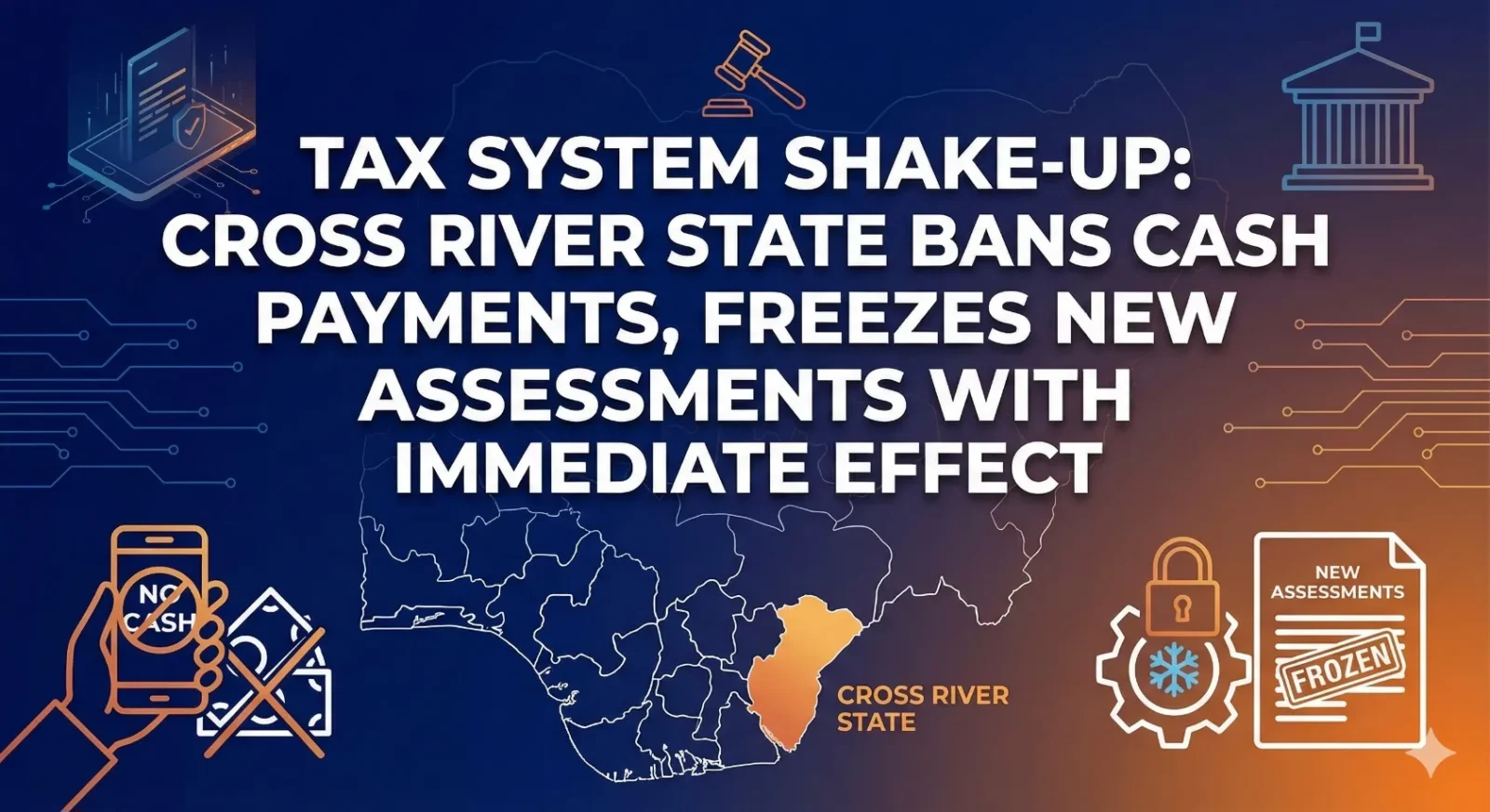
Anybody can find it difficult to navigate taxes. The emergence of new law changes is usually associated with more questions than answers. The Cross River State Internal Revenue Service (CRIRS) has introduced radical reforms to its tax regime and they are effective in the present time. Read on 3 Surprising Signals from Nigeria’s Latest Treasury Bill Auction.
Following the commencement of the new Tax Administration Act of 2025 in Nigeria, CRIRS gave an order on January 6, 2026. The directive alters some of the most important methods of checking and collecting revenue. This paper defines the three most significant lessons and their implications to taxpayers and the future of the tax administration in the state.
1. An Immediate Freeze on New Tax Assessments
CRIRS has directed that no tax assessment should be made at this time. Until further notice, all the revenue consultants within the state should refrain issuing the assessment on state taxes.
This is a surprising initial step that demonstrates how serious the state is with regard to going through everything. The stop is not a cancellation, it is a break to ensure all the future evaluations according to the new national law, and reduce revenue losses in the state. Avoiding errors and aligning the tax system of the state with the new federal law is a fundamental measure.
2. Cash is No Longer King: A Mandatory Shift to Digital Payments
CRIRS no longer receives taxes in cash in order to minimise financial leakages. Henceforth, taxpayers will only have to pay through two methods that are approved, which are designated digital platform or direct bank deposits to the government revenue accounts.
The order cautions the citizens: taxpayers should not remit to personal or firm accounts of the revenue agents, consultants or tax officers. The conversion to digital payments leaves a clear account of all the transactions, reducing the possibility of fraudsters. This step addresses the informal grey economy that has been causing revenue collection to suffer several decades ago and every naira will be tracked by the taxpayer to the treasury.
3. This Isn’t About Punishment, It’s About a Fairer System
According to Prince Edwin Okon, the Executive Chairman of CRIRS, these immediate actions are not isolated directives but foundational steps in a broader reform agenda designed to:
- Strengthen transparency, accountability, and efficiency in revenue administration.
- Harmonise various taxes and levies.
- Eliminate the persistent problem of multiple taxation.
- Improving the quality and reliability of record-keeping.
To allay public concern, the Service delivered a clear message on the initiative’s purpose:
The reforms are not punitive… the measures are intended to simplify processes and promote fairness, rather than impose additional burdens.
Conclusion: A New Chapter for Tax Administration?
The government of Cross River State has resolved to reform the way of collecting taxes. It has prevented the assessment of new taxes, mandated all the payments done electronically, and is long-term objective to be fair and transparent. These measures are in-line with the new national Tax Administration Act, and are a tremendous change compared to the previous times.
Will other states copy the model of tax collections followed by Will Cross River as it shifts highly to digital payments and to clearer rules?








Leave a comment